
















AI - Artificial Intelligence, Employee Engagement , Recruitment, Retention Strategy, Training & Development
Key Takeaways:
- Skills-based development: Organizations that prioritize continuous learning over tenure can strengthen retention, engagement, and long-term workforce readiness.
- Employee growth: Clear development opportunities matter because employees are more likely to stay when they can see a path to build new skills and advance.
- Personalized learning pathways: Tailored development plans help employees close skill gaps with targeted courses, certifications, and career-aligned goals.
- Cross-functional skills: Internal mobility, skill swaps, and temporary placements help people grow beyond linear career paths and prepare for broader roles.
- AI training: Practical AI learning, including simulations and short certifications, helps employees build confidence with new tools and apply them in real work.
- Skills-based hiring: Hiring for capability and potential instead of tenure or credentials can expand access to talent and improve role fit.
Today’s workplace is evolving rapidly. And that means employees’ skills need to continuously evolve as well. This skills-based development approach puts employee training and development programs at the forefront of both organizational success and employee satisfaction, because when you prioritize professional development, employees recognize you are invested in their long-term success and they in turn will work harder, stay longer, and bring their best selves to work every day.
Indeed, research shows that 63% of employees cite no opportunities for advancement as a top reason for leaving a job. And a recent Great Place To Work® LinkedIn poll revealed that 43% of people called out a lack of growth opportunities as the top reason they quit their last job.
Career growth in modern workplaces looks much different than it did even a decade ago. As organizations increasingly rely on artificial intelligence (AI) tools and automation to stay competitive, career progression based on years of service is no longer a given. Nor is moving up the career ladder. Instead, continuously learning new skills and empowering people to grow and challenge themselves can provide the career satisfaction that keeps people invested in their jobs and their success.
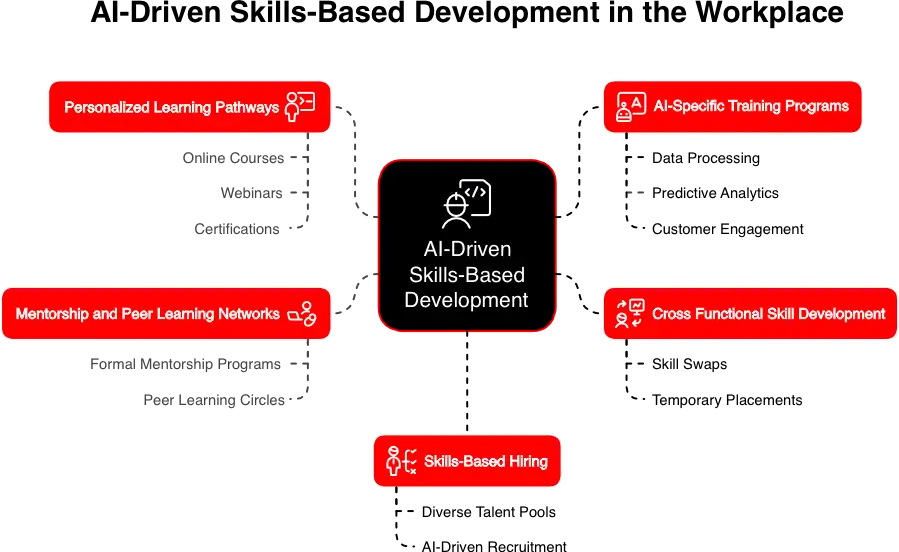
The best employers will facilitate this transition by prioritizing skills-based development; using upskilling and reskilling to empower employees, boost engagement, and future-proof their workforce. The Best Workplaces™ for Professional Development are at the forefront of this change, setting the pace for continuous learning and adaptability with 92% of their people agreeing they are offered training or development to further themselves professionally and 91% agreeing people quickly adapt to changes needed for organizational success. Here are some of the skills-based development practices they are using:
1. Personalized Learning Pathways
Leading companies are designing personalized employee development plans that align with employees’ career goals and organizational need. These plans often include access to online courses, webinars and certifications tailored to specific skill gaps. Employees are encouraged to pursue skills relevant to their current roles and those identified on their career path.
AI Opportunity: Use an AI learning platform to turn a library of online webinars and training modules into a personalized learning plan that maps employee career paths, sets goals, identifies skill gaps, and recommends specific courses and timelines.
2. Cross Functional Skill Development
To support career advancement as well as non-linear career progression, the best companies are encouraging employees to gain skills and find opportunities within their organization. Through skill swaps and temporary placements, employees can upskill on-the-job and prepare themselves for new and more multifaceted roles that AI will inevitably introduce.
AI Opportunity: Use AI to build an internal talent marketplace. Use this tool to suggest open positions that align with employees’ career goals, track employees’ skills and match them with upcoming projects, and even increase equity of opportunity by removing some of the bias involved in choosing who gets what opportunities.
Get Certified™
Great Place To Work® Certification can tip the scales in your favour and help you retain top candidates.
3. Mentorship and Peer Learning Networks
Formal mentorship programs and peer-to-peer learning networks are powerful tools for skills-based development. They provide employees with guidance, feedback, and real-world insights, which fosters a culture of continuous improvement. Peer learning circles are another great way to share expertise and can be used to develop AI related skills using practical applications from across the organization.
AI Opportunity: Use the power of AI to effortlessly match employees with a mentor who is best suited for their career goals. These tools can be used to facilitate effective reverse mentoring opportunities as well and take much of the guess-work out of creating a great match.
4. AI-Specific Training Programs
As AI reshapes job functions, companies are investing in targeted training to help workers leverage AI tools effectively. This includes teaching employees to use AI for tasks like data processing, predictive analytics, or customer engagement, as well as understanding ethical AI practices. To make the learning more engaging, employers are also using short, focussed certifications to validate specific skills.
AI Opportunity: Let AI be the trainer. For instance, AI Chatbots are being used by sales teams to practice their pitch or hone their sales skills. Customer service employees use AI to practice various interactions and simulate difficult conversations to practice their de-escalation techniques.
5. Skills-Based Hiring
To round out a skills-based development strategy, start prioritizing candidates’ abilities and potential over traditional credentials or years of experience in all of your recruitment and hiring practices. Focusing on what candidates can do rather than their tenure or degrees allows employers to tap into diverse talent pools, including people who have made career changes, self-taught individuals, and those from underrepresented groups.
AI Opportunity: Use an AI tool to streamline hiring. Upload job descriptions and candidate profiles and let AI rank candidates based on the skill fit parameters you set, or use AI to conduct interviews or real-life job simulations. You can even use AI’s predictive analytics to assess candidates’ potential and compare them to current high performing employees.
With the rapid advancement of AI and technology, it’s time to rethink the workplace and put skills first. This makes continuous upskilling and skills-based development more critical than ever and introduces a significant change to traditional notions of career advancement based on seniority. And while this change can be daunting, it heralds an opportunity to create deeper and more meaningful connections to work when employers support their people along their upskilling journey.
Ultimately, career growth in the modern workplace presents exciting opportunities, and the Best Workplaces™ for Professional Development are embracing and leveraging AI to thrive in an AI-driven world.
Check out the complete list of 2025 Best Workplaces™ for Professional Development List.
Get Certified
Want to know how your people feel about your workplace culture during times of change? Get Certified today and learn the answer to this question and gain many more insights along the way.
Frequently Asked Questions:
How does skills-based development support employee retention?
Often involves assessingWhen employees can build new skills and see a clear path for growth, they are more likely to stay engaged and committed. Growth opportunities are closely tied to retention because stalled advancement often pushes people to leave. skill gaps, offering tailored course recommendations, and setting developmental milestones linked to career trajectories.
What makes a personalized learning pathway effective?
A strong learning pathway connects career goals with business needs, identifies skill gaps, and gives employees access to relevant courses, webinars, certifications, and timelines that support steady progress.
How can cross-functional development help employees grow?
Cross-functional development gives employees hands-on opportunities to build broader capabilities through skill swaps, temporary placements, and project-based experience, which prepares them for more dynamic roles.
How can AI strengthen employee growth and hiring?
AI can personalize learning plans, match employees with mentors or internal opportunities, simulate real workplace scenarios for training, and help hiring teams assess candidates based on skill fit and potential.