












AI - Artificial Intelligence, Company Culture, Employee Survey, Leadership & Management, Retention Strategy
Key Takeaways:
- Leadership support: Culture gains traction when leaders see it as a business investment tied to retention, resilience, and long-term performance.
- Turnover costs: Replacing one employee can cost around $4,700, before factoring in onboarding time, lost productivity, and pressure on team dynamics.
- Employee engagement: Employees who feel valued and heard are more likely to contribute to stronger performance and more consistent business outcomes.
- Trust Index Survey: Confidential culture data helps organizations identify the workplace factors that influence retention, engagement, and results.
- Pilot approach: Starting with one team or department makes it easier to measure impact, build proof, and expand culture efforts with confidence.
- Leadership credibility: Open dialogue, employee feedback, and real workplace stories help leaders build trust while showing that culture decisions drive real impact.
"Shift hesitation into support by helping leadership clearly see the business value of a strong workplace culture — and become committed champions of it."
In a recent Great Place To Work Webinar focused on leadership behaviours that support retention, one key theme stood out: the growing curiosity around how to turn cultural insights into executive action. The discussion raised an important question — how can organizations ensure that senior decision-makers view culture not as a soft initiative, but as a strategic investment that drives real results?
Despite having access to compelling research on the connection between culture and retention, many organizations still face a challenge — translating those insights into leadership buy-in. The data is there, but turning awareness into action remains a hurdle.
This shift starts with reframing how we view our people — not as headcount or line items, but as the driving force behind innovation, service, and long-term success.
Bringing Culture Data to Life
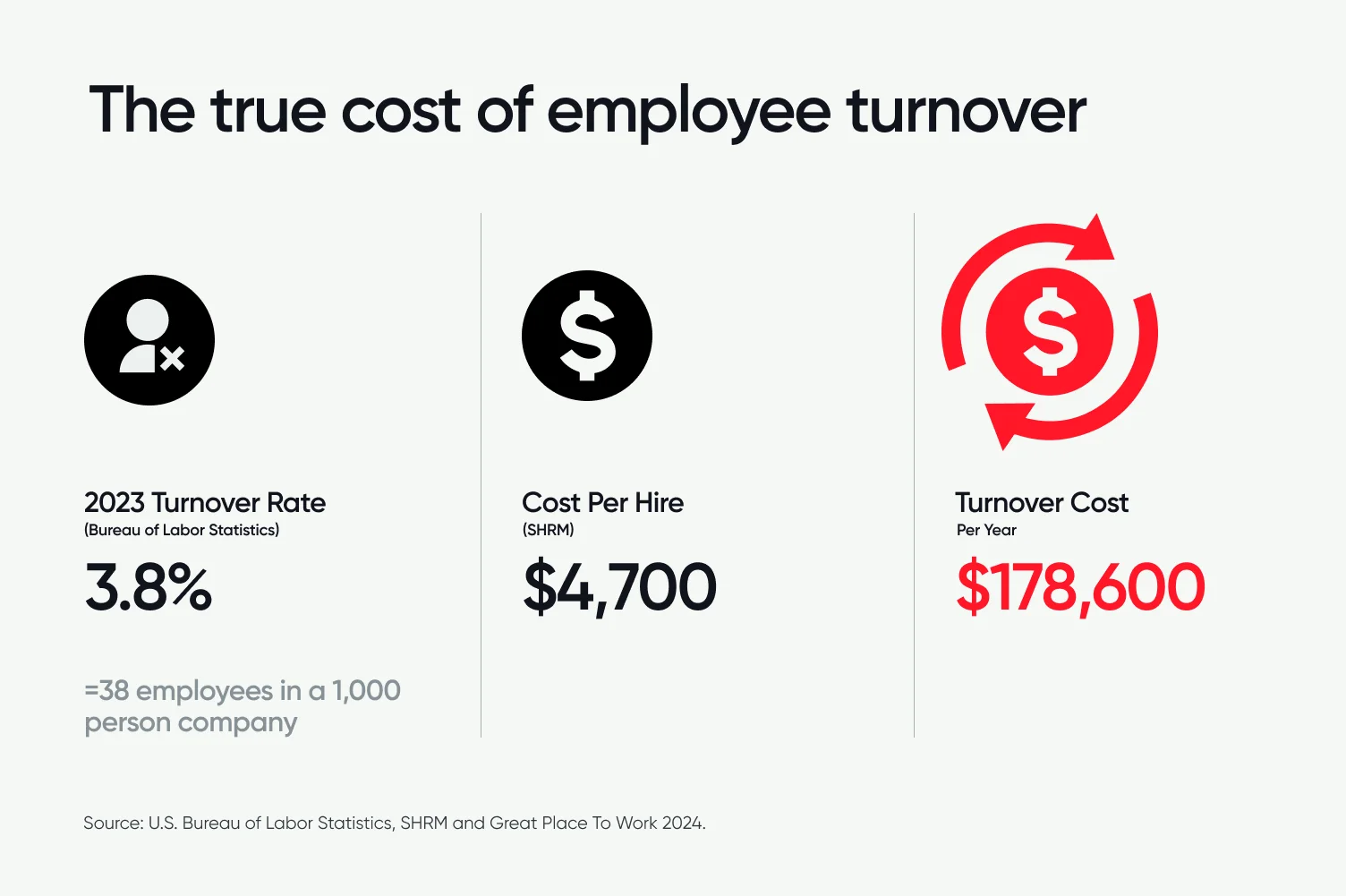
First, highlight the cost impact. On average, replacing an employee can cost around $4,700 — and that’s a conservative estimate. This figure doesn’t include the time spent onboarding, the loss in productivity, or the strain on team dynamics when someone exits. These hidden costs can quickly add up, making turnover a significant concern for any organization’s bottom line.
Start with the financial impact. Replacing an employee can cost thousands of dollars — and that’s a conservative estimate. This doesn’t even account for training time, the drop in productivity, or the impact on team morale. It’s a significant cost that adds up quickly across departments.
Connecting Culture to Business Performance
Next, it’s important to highlight that engaged, supported teams contribute directly to stronger business outcomes. When employees feel valued and heard, performance improves across the board. Tools like the Great Place to Work® Trust Index™ Survey offer a reliable way to measure and enhance the cultural drivers that influence those outcomes.
Organizations with strong workplace cultures experience lower turnover, reducing the financial and operational burden of replacing staff. Their teams are more resilient, less prone to burnout, and consistently productive. In these environments, innovation is part of the everyday — and when market conditions shift, these companies are often the first to adapt and recover.
Helping Leaders Lead with Impact
What often resonates most is the desire among leaders to leave a meaningful mark. Positioning Great Place to Work® Certification as a credible, earned distinction reinforces that. It reflects a commitment to building a workplace where people thrive — something that leadership teams can genuinely take pride in.
Certification also serves as a strong signal to stakeholders, including investors, that your organization takes its ESG (environmental, social & governance) commitments seriously. According to a recent study by IBM, 70% of employees say sustainability initiatives make a workplace more attractive — and that perception extends beyond employees to the broader business community.
A good place to start is with a pilot approach. Introduce these culture-building strategies within one department or team. It’s a practical way to test outcomes and demonstrate measurable impact before expanding more broadly.
Ultimately, it comes down to listening and open dialogue. Scheduling conversations, encouraging transparent feedback, and using confidential tools like the Trust Index™ Survey can help surface real insights. When those data points are paired with genuine employee stories, they create a compelling case — one that shows culture drives results and builds lasting leadership credibility.
Tools & Resources
- Certification: Recognition through Great Place to Work® Certification signals to stakeholders that your workplace culture is thriving. Use it as a tool to build credibility, attract talent, and show that your organization walks the talk on employee experience.
- Employee Survey: Gain actionable insights with the Trust Index™ Survey. This confidential, research-backed tool measures key cultural drivers that impact retention, engagement, and business performance — giving you a clear path forward.
- Leadership Development: Equip leaders with the tools to build high-trust teams. Our programs help managers turn culture into a leadership strength by aligning people strategies with business goals.
- Company Culture: Create a workplace where people want to stay. Our resources support organizations in building strong, inclusive cultures that reduce turnover, increase resilience, and drive long-term success.
Get Certified
Want to know how your people feel about your hiring practices and workplace experience? Get Certified today and learn the answer to this question and gain many more insights along the way.
Frequently Asked Questions:
How does leadership support influence company culture?
Leadership support helps turn culture into a shared business priority. When leaders actively back trust, feedback, and employee experience, culture becomes stronger and more consistent across the organization.
Why is turnover an important culture metric for leaders?
Turnover carries direct and indirect costs, including replacement expenses, onboarding time, productivity loss, and strain on teams. That makes retention a practical way to show the value of culture investments.
What makes culture data useful for executive decision-making?
Culture data gives leaders a clearer view of what employees are experiencing and which workplace factors affect retention and performance. It helps connect people insights to measurable business outcomes.
What is a practical way to build leadership buy-in for culture initiatives?
Start with a pilot in one team or department, measure the impact, and pair the results with employee feedback. That creates a more credible case for broader leadership support.