



Benchmarks & Trends, Company Culture, Employee Survey, Employee Experience, Leadership & Management
Key Takeaways:
- Workplace benchmarking: Comparing results with similar organizations gives leaders clearer context for employee feedback and workplace performance.
- Relevant comparisons: Benchmarks segmented by company size and region make results easier to interpret and more useful for decision-making.
- Action planning: Peer comparisons help leaders identify strengths, prioritize improvement areas, and focus on initiatives that matter most.
- Leadership communication: Benchmark data helps HR and people leaders demonstrate progress and add context when discussing culture investments with executives.
- Progress tracking: Ongoing benchmarking helps organizations recognize improvement over time and maintain momentum as workplace culture evolves.
Organizations across Canada are investing more time and resources into improving workplace culture, employee experience, and overall performance. Yet many leaders face the same challenge: understanding how their organization truly compares to others.
This is where benchmarking becomes valuable.
In simple terms, benchmarking means comparing your organization’s results against those of similar organizations to understand where you stand and where improvements are possible. When done effectively, benchmarking helps leaders identify strengths, uncover gaps, and measure meaningful progress over time.
Without credible benchmarks, however, it can be difficult to interpret employee feedback or determine whether improvements are truly making a difference.
That’s where Journey To Great Benchmarks can help. This feature provides organizations with a more relevant way to compare their workplace culture and performance against peers that share similar characteristics, making benchmarking insights more practical and easier to act on. Book a demo now.
Why benchmarking performance matters for organizations

Benchmarking plays an important role in helping organizations understand how their workplace culture and employee experience are evolving.
By comparing results against credible benchmarks, leaders gain a clearer view of how their organization performs relative to similar workplaces. These insights can help identify strengths, highlight areas for improvement, and guide decisions about where to focus future efforts.
For many organizations, the Trust Index™ Employee Feedback Survey already provides valuable insights into employee feedback. However, benchmarking helps provide context for that data by showing how results compare to other organizations.
Many organizations look to the Best Workplaces™ in Canada lists as an example of what strong workplace culture can look like. While these organizations demonstrate what is possible, not every organization is at the same stage of its journey.
Comparing results only against top-performing workplaces can make it difficult for organizations to understand their own progress—especially when differences in company size, resources, or maturity influence outcomes.
Benchmarking against organizations that share similar characteristics often provides a clearer and more useful perspective.
Why generic benchmarks can create challenges
Organizations often rely on broad benchmarks that compare results across large groups of companies. While these comparisons can provide general insights, they do not always reflect the specific context of each organization.
When benchmarking data does not align with an organization’s reality, several challenges can arise.
- Demonstrating progress becomes difficult: If organizations consistently compare themselves to top-performing companies, meaningful improvements may be difficult to recognize. Even when employee experience is improving internally, results may still appear far behind industry leaders.
- Goals may feel unrealistic: Benchmarks that fail to reflect an organization’s size, industry, or operating environment can make improvement goals feel unattainable. Instead of motivating progress, these comparisons may create confusion about what success actually looks like.
- Strategic planning lacks context: Effective workplace strategies require realistic benchmarks. Without relevant comparison points, leaders may struggle to determine which areas require attention or which initiatives will have the greatest impact.
- Competitive insights remain unclear: Benchmarking can also help organizations understand where they stand relative to peers. Without this perspective, leaders may miss opportunities to build on strengths or address areas where improvement is needed.
These challenges highlight the importance of benchmarking against organizations that share similar characteristics rather than relying solely on broad industry comparisons.
A more relevant way to benchmark workplace performance
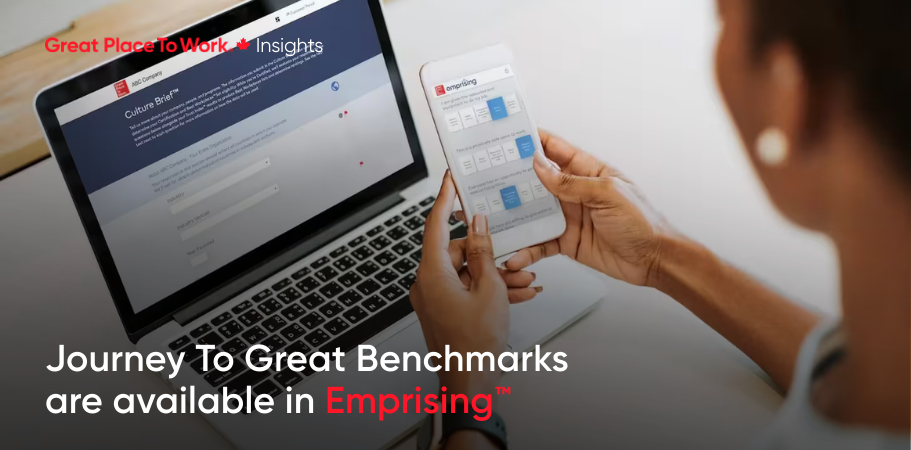
Journey To Great Benchmarks provides organizations with a more practical way to benchmark workplace culture and employee experience.
Instead of comparing results only against organizations on Best Workplaces lists, this feature allows organizations to benchmark themselves against Great Place To Work® Certified™ organizations with similar characteristics, including company size and region.
This approach creates more relevant comparison points and helps organizations better understand their performance relative to peers.
Journey To Great Benchmarks are available in Emprising™, allowing organizations to view benchmarking insights alongside their survey results without switching between tools. Book a demo today to see how it works.
For organizations with Analyze or Accelerate subscriptions, these benchmarks can provide additional context that supports deeper analysis of employee feedback.
The benchmarks are refreshed annually and are based exclusively on data from Certified organizations, ensuring comparisons are grounded in credible and current workplace insights.
4 key insights you gain with Journey To Great Benchmarks

Journey To Great Benchmarks help organizations translate employee feedback into meaningful action by providing clearer benchmarking insights.
1. Relevant comparisons
Benchmarks are segmented by company size and region, allowing organizations to compare themselves with peers that share similar characteristics. This makes benchmarking results easier to interpret and more useful for decision-making.
2. Better action planning
When organizations understand how they perform relative to peers, it becomes easier to identify areas for improvement. Benchmarking insights can help leaders prioritize initiatives that support stronger employee experience and workplace culture.
3. Clearer leadership communication
Benchmark data can help HR and people leaders demonstrate progress to executives and decision-makers. Showing how results compare to similar organizations provides valuable context when discussing workplace investments and culture initiatives.
4. Tracking improvement over time
Workplace culture improvement is an ongoing process. Benchmarking allows organizations to track progress over time, recognize improvements, and maintain momentum as their workplace culture evolves.
Interested in learning how Journey to Great Benchmarks can guide your workplace culture transformation?
Reach out to our team to learn how to start using these insights within your organization.
Using benchmarking insights to strengthen workplace culture
HR and people leaders can leverage these benchmarks to shape action plans, uncover improvement opportunities, and accelerate progress toward a high-trust workplace culture.
Below are a few ways these benchmarks can support and strengthen your culture initiatives.
- Show progress to leadership: Benchmarking helps organizations show how workplace culture is evolving relative to comparable organizations. This can provide leadership teams with clearer evidence that culture initiatives are delivering results.
- Set realistic improvement goals: Rather than comparing results to aspirational outliers, organizations can establish goals based on what similar organizations are achieving. This creates clearer expectations and helps teams stay motivated.
- Identify competitive strengths: Benchmark insights can also reveal areas where an organization performs particularly well compared to peers. These strengths can support recruitment messaging, employee retention strategies, and employer brand positioning.
Building a stronger workplace culture through benchmarking
Improving workplace culture requires consistent measurement and thoughtful action. Benchmarking helps organizations understand where they stand and where progress is happening over time.
When organizations regularly compare their results with similar organizations, they gain clearer insights into what is working well and where improvement may be needed. These comparisons help leaders prioritize initiatives, track progress, and make more informed decisions about how to strengthen workplace performance.
This article is an adaptation of the original Great Place To Work®, written by Raven Trice, Digital Marketing Program Manager.
Feedback
We value your feedback! Your insights are crucial to helping us create meaningful content. Are there specific challenges you'd like us to address? Share your suggestions or ideas with us. Together, we can develop resources that truly make a difference. Have feedback? Fill out this form by clicking here.
Frequently Asked Questions:
What is workplace benchmarking?
Workplace benchmarking compares your organization’s culture and performance results with similar organizations so you can identify strengths, spot gaps, and measure progress more clearly.
Why is benchmarking important for Canadian organizations?
It gives employee feedback meaningful context, supports realistic goal-setting, and helps leaders plan improvements based on comparisons with relevant peers.
What makes relevant benchmarking more useful than general comparisons?
Relevant benchmarks consider factors such as company size and region, making comparisons more practical and the resulting insights easier to act on.
How often are benchmarks updated?
Benchmarks are refreshed annually to keep workplace comparisons current, relevant, and credible.