
Employee Engagement , Employee Survey, Employee Trust
Key Takeaways:
- Business growth is harder to find when only 27% of Canadian CEOs expect Canada’s economy to improve, which makes people the steadier lever.
- People strategy pays off when training, better tools and listening are funded as part of the growth plan rather than treated as extras.
- Employee feedback only matters when leaders visibly act on it, as one retailer did by simplifying schedules after frontline teams asked for predictability.
- Pulse survey results give quick input from many people all year, while a deeper annual survey validates the trends without causing fatigue.
- Great leaders shape the daily experience of frontline teams, so leader development is one of the most direct investments an organisation can make.
- Building trust grows when action plans live inside regular operations and peer-led focus groups make candid feedback easier to share.
Growth sits near the top of every leader's agenda, and the pressure to deliver it is rising. More than $2 trillion has been invested globally in 2026, according to the International Monetary Fund, yet the revenue to match is slow to arrive.
Leaders feel the strain. Only three in 10 CEOs (30%) reported confidence in their revenue growth at the start of 2026, according to PwC's global CEO survey, a steep drop from 2022, when more than half felt confident. The mood is even more cautious at home: PwC Canada's 29th Annual CEO Survey found that just 27% of Canadian CEOs expect Canada's economy to improve over the next 12 months, down from 42% a year earlier.
Fewer Canadian CEOs expect Canada's economy to improve
Share of Canadian CEOs who expect Canada's economy to improve over the next 12 months
Source: PwC Canada, 29th Annual Global CEO Survey (133 Canadian CEOs), January 2026. Each bar is drawn against a 0 to 100% scale.
With markets betting so heavily on new technology, this is a poor time to let momentum slip. Organisations recognised through Great Place To Work® Canada take a different route to business growth: they invest in their people through training, better tools and the resources to do great work. Here is how they turn what employees say into results.
Why business growth depends on your people strategy
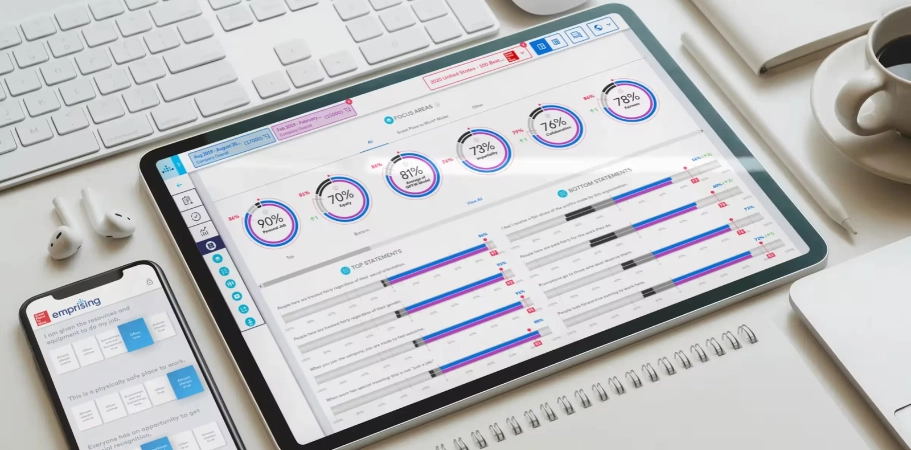
A strong people strategy treats employees as the engine of performance rather than a cost to manage. Picture a large national retailer that puts significant money into its stores, payroll, training and technology so that every shopper meets a friendly, experienced team member. The thinking is simple: when people have what they need to do their best work, customers feel the difference and performance follows. As retail becomes more human, better tools are what let employees deliver that experience.
Investing in people also helps organisations ride the wave when demand surges. Consider a utility that is growing quickly as infrastructure demand rises, in part because of the build-out behind AI and data centres. That growth opens up opportunities for employees, but only if they feel change is happening with them rather than to them. Making that real takes a strong listening strategy: regular pulse surveys, focus groups, town halls, and the depth of insight that comes from a Great Place To Work® employee survey.
The gap between ambition and investment is visible across Canada too. Statistics Canada reports that 29.7% of workers took part in job-related training in the 12 months ending in November 2024, which means roughly seven in ten did not. Organisations that close that gap give themselves a real edge in business growth.
What it means to listen: employee feedback that shapes decisions

If people are central to growth, leaders have to stay closely connected to them. For the strongest workplaces, listening is fundamental. Employee feedback arrives through surveys, input sessions, focus groups and everyday conversations, and it shapes how the business operates. The test is simple: feedback only matters if the organisation does something with it.
One retailer, for example, heard from frontline team members that they needed more predictability, visibility and flexibility in their schedules. The response was a simpler, more integrated scheduling experience. Early results are encouraging, but the listening has not stopped, because the best decisions tend to come from the people closest to the work.
Listening looks different when employees are split between offices and the field. The utility in our example meets people where they are, which can mean someone joining a focus group by video call from a work truck. Where the culture of listening and responding is strong, employees make time to share their views even when it is inconvenient, and survey results reflect a workforce that feels the organisation cares about them.
Great leaders are at the heart of building trust

Building trust starts with leaders, which is why the strongest organisations make sure every employee has a great leader. The frontline leader is one of the most important roles in any company: so much of a team member's daily experience comes to life through the person they work with every day.
That is why these organisations invest heavily in developing great leaders, through programmes for new leaders and structured pathways to senior roles. A good number of their senior leaders began on the front line themselves, which shows teams that growth is real. When employees feel a strong connection with their leaders, trust follows, and with it the willingness to give honest feedback.
3 ways to turn employee feedback into business growth
Here is what organisations that lead on listening have found makes a real difference when gathering feedback that drives business growth.
1. Go beyond the annual survey. Listening works best all year round. A pulse survey is simple and straightforward, giving you quick input from a large number of people. A deeper annual survey can then validate the trends those pulses reveal, adding insight without causing survey fatigue.
2. Make action plans part of regular operations. Ask every site, store or team to build an action plan informed by employee feedback and survey results, and have leaders hold regular check-ins to see where progress is being made. Leader visits double as a chance to see what is working and what could be better across the organisation. Because the business keeps changing, treat each plan as a living document that is expected to change too.
3. Make focus groups peer-led. People tend to feel more comfortable sharing candid views with a peer, so peer-led discussions often produce richer feedback. There is a second benefit: facilitating a session lets employees build leadership skills, and it helps organisations spot potential they might otherwise miss.
Where to start
Employee feedback does not drive business growth on its own. Results come from listening often, acting visibly and equipping great leaders to respond. A Great Place To Work® employee survey shows you where trust is strong and where it needs attention, and the research behind the Great Place To Work Effect shows how that trust connects to the business results leaders are chasing. Start with the one change your people have asked for most, make it visible, and let that momentum carry the next one.
This article is an adaptation of the original Great Place To Work®, written by Ted Kitterman, Content Manager.
Feedback
Your feedback matters to us! We are always looking for ways to make our content more useful for Canadian leaders. Have feedback? Fill out this form by clicking here.
Ready to earn Great Place To Work Certification™?
Start your journey today and showcase your culture to the world.
People Also Asked
What is a pulse survey?
A pulse survey is a short, frequent employee survey that gathers quick input from a large group. It tracks how people feel between deeper annual surveys and shows early whether a change is landing.
How do you get feedback from employees?
Combine several channels: surveys, focus groups, town halls and everyday conversations. Using more than one route reaches people in different roles and locations, from office teams to employees in the field.
Are pulse surveys anonymous?
That depends on how an organisation designs and reports them. Stating up front how responses are collected and who sees them is one of the most reliable ways to raise both participation and candour.
How does employee feedback connect to business performance?
Feedback shows where employees need support to do their best work. When leaders act on it, customers and colleagues feel the difference, and performance follows.
What is Great Place To Work Certification™?
Certification is recognition earned on the strength of what your own employees report through the Trust Index™ Survey. It validates your culture internally and signals it to the Canadian talent market.
Frequently Asked Questions:
How does employee feedback support business growth?
Feedback shows leaders where employees need better tools, clearer schedules or stronger leadership. Acting on it improves the work that customers and colleagues experience, and that visible follow-through is what links listening to growth.
How often should leaders gather employee feedback?
All year round. Pulse surveys give quick input from a large group, and a deeper annual survey validates the trends they reveal without causing survey fatigue.
What makes a focus group work well?
Peer-led sessions. Employees tend to share more candid views with a colleague, and facilitating a session also lets them build leadership skills while helping organisations spot future leaders.
How should leaders treat an action plan?
As a living document. Ask every team to build a plan from feedback and survey results, hold regular check-ins on progress, and expect the plan to change as the business changes.
Why do great leaders matter for building trust?
Much of an employee’s daily experience comes to life through the person they work with every day. Programmes for new leaders and clear pathways to senior roles strengthen that connection.
What does a people strategy include?
Funding for training, better tools and resources, plus a listening approach built on pulse surveys, focus groups, town halls and an employee survey, so employees feel change happens with them.