




Employee Wellbeing, Employee Experience, Purpose, Psychological Safety
Key Takeaways:
- Employee well-being: Five connected dimensions shape how employees feel, function, build resilience, and flourish at work.
- Mental and emotional support: Positive mental energy helps employees manage stress, build confidence, and maintain a healthier outlook at work.
- Sense of purpose: Fulfilment, meaning, and progress strengthen resilience and help employees connect their roles to the organization’s mission.
- Personal support: Trusting managers, flexibility, job control, adequate resources, and development opportunities help employees feel supported.
- Financial health: Fair pay, financial stability, and equitable compensation practices help reduce anxiety and support overall well-being.
- Meaningful connections: Caring relationships, inclusion, and psychological safety strengthen belonging, teamwork, and workplace support.
By creating a climate of mental support, purpose, financial health, and meaningful connections, business leaders can provide a foundation for positive well-being that allows employees to flourish.
Office gyms and meditation breaks are nice, but employee well-being is much more complex than physical fitness and mindfulness.
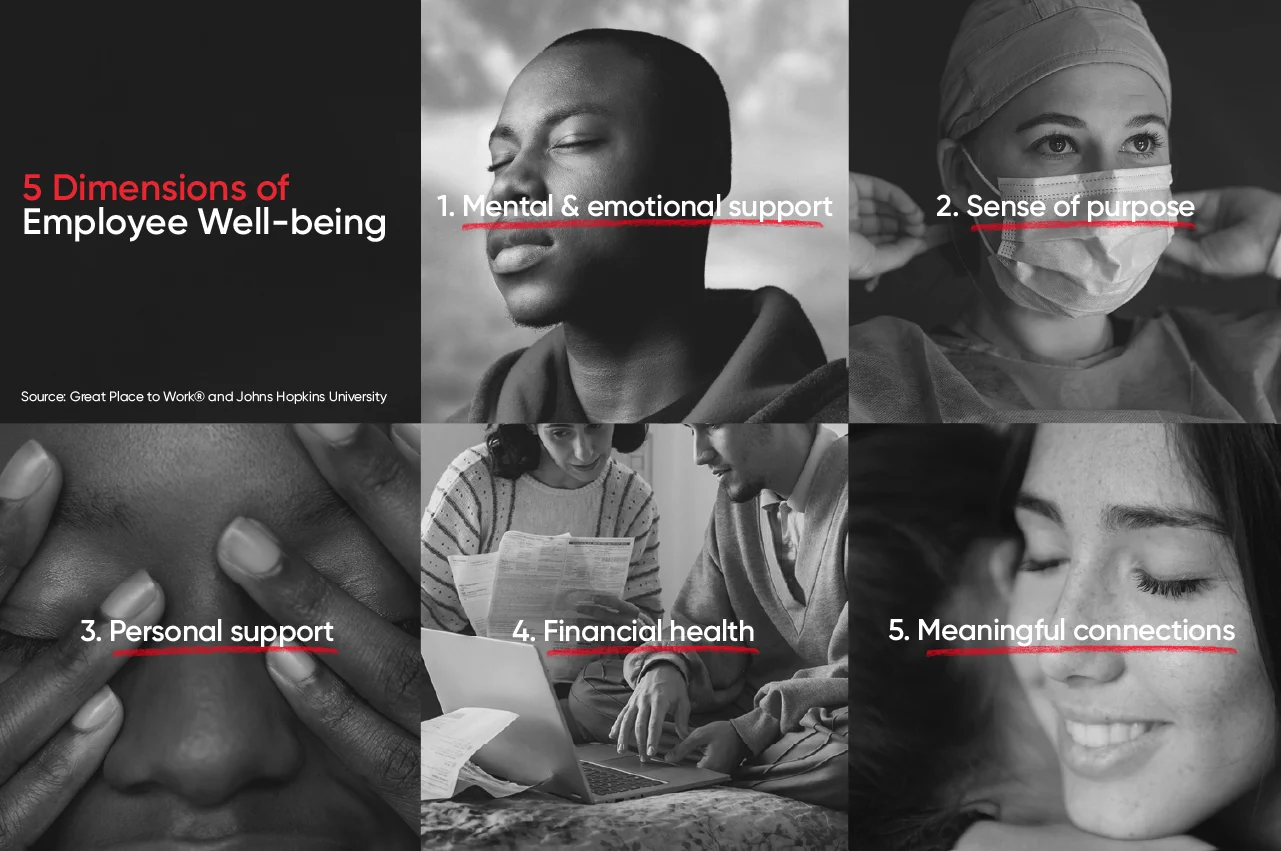
Great Place To Work® partnered with researchers at Johns Hopkins University in a special study to determine the true sources of employee well-being.
We surveyed over 14,000 people from 37 countries to better understand trends in the average worker’s day-to-day experiences of well-being and their workplace. Employee experience is influenced by many factors, but five are key for creating the climate necessary for positive employee well-being:
1. Mental & emotional support
This relates to the feelings and experiences that build and sustain positive mental energy. When employees have good mental and emotional support, they are more likely to have what psychologists call “positive attribution” or “optimistic attribution” style.
Positive attribution can build optimism, energy, hope, and confidence in people, which builds what is known as psychological capital.
Positive mental energy can greatly influence an individual’s outlook and perception of their surroundings or workplace. An individual who experiences strong mental and emotional support can better manage workplace stress and anxiety.
2. Sense of purpose
A sense of purpose comes from experiencing three things at work:
- Fulfillment
- Meaning
- Progress
Having a strong sense of purpose has been linked to higher resilience and more favorable views of employers.
Aligning an individual’s role with the organization’s mission, or identifying tasks as critical, can foster a higher sense of purpose or fulfillment.
3. Personal support
Working with others – especially managers – who create a safe, trusting, and respectful atmosphere can be an important predictor of employee well-being.
Employees with high levels of workplace flexibility and job control, as well as the resources to accomplish their goals, have evidence of personal support.
Managers can also demonstrate support through employee development and career growth opportunities.
4. Financial health
When employees lack adequate financial resources, anxiety and fear can affect their outlook.
While some might argue that people are never satisfied with their compensation, it is important that employees earn enough to feel financially stable and capable of living freely.
Financial dissatisfaction can also arise when there is inequity in a workplace’s compensation practices. This highlights the importance of equal pay and promotion practices.
5. Meaningful connections
Supportive social relationships can be associated with lower stress levels. Having meaningful and caring relationships with co-workers and leaders is an integral part of the work experience, especially when they support personal needs.
An environment of equity and inclusion is also necessary to create psychological safety and teamwork, which can foster a sense of belonging.
There is a growing urgency to address employee well-being because of how it will impact the future workplace. By focusing on one or more of these areas, your company can build toward a healthier workplace and better employee retention.
Get more company culture advice in your inbox
Want more tips and strategies for a better employee experience? Subscribe to get the latest insights and blogs from the global authority in company culture.
Frequently Asked Questions:
What are the five dimensions of employee well-being?
The five dimensions are mental and emotional support, sense of purpose, personal support, financial health, and meaningful connections. Together, they create the conditions employees need to flourish at work.
Why is mental and emotional support important in the workplace?
Mental and emotional support helps employees build optimism, confidence, and positive mental energy, improving how they manage workplace stress and anxiety.
What creates a stronger sense of purpose at work?
A strong sense of purpose comes from fulfilment, meaning, and progress, especially when employees understand how their work contributes to the organization’s mission.
What does personal support look like at work?
Personal support includes trusting and respectful manager relationships, flexibility, job control, adequate resources, and opportunities for development and career growth.
Why is financial health important for employee well-being?
Financial stability helps reduce anxiety and allows employees to feel more secure. Fair pay and equitable compensation practices are important parts of that support.
How do meaningful connections support employee well-being?
Caring relationships with colleagues and leaders reduce stress and strengthen belonging. Inclusion and psychological safety also help employees collaborate and contribute confidently.